Author ad

Showing posts with label Matthew 28:18-20. Show all posts

Friday, April 24, 2026

60 Questions On The Godhead

Hello everyone.  Praise the Lord!

60 QUESTIONS ON THE GODHEAD WITH BIBLE ANSWERS 

Google creative commons


1. Is the word trinity in the Bible? No.

2. Does the Bible say that there are three persons in the Godhead? No.

3. Does the Bible speak of the Father, Son, and Holy Ghost? Yes.

4. Do these titles as used in Matthew 28:19 mean that there are three separate and distinct persons in the Godhead? No, they refer to three offices, roles, or relationship to humanity.

5. Does the Bible use the word three in reference to God? Only one verse in the entire Bible does so-I John 5:7. It speaks of the Father, the Word (instead of Son), and the Holy Ghost, and it concludes by saying, "These three are one."

6. Does the Bible use the word one in reference to God? Yes, many times. For example, see Zechariah 14:9; Malachi 2:10; Matthew 23:9; Mark 12:29, 32; John 8:41; 10:30; Romans 3:30; I Corinthians 8:4; Galatians 3:20; I Timothy 2:5; James 2:19.

7. Can the mystery of the Godhead be understood? Yes. Romans 1:20; Colossians 2:9; I Timothy 3:16.

8. Has the Christian only one Heavenly Father? Yes. Matthew 23:9.

9. Then why did Jesus say to Philip, "He that hath seen me hath seen the Father" (John 14:9)? Because Jesus is the express image of God's person. Hebrews 1:3. The Greek word for person in this verse literally means "substance."

10. Does the Bible say that there are two persons in the Godhead? No.

11. Does the Bible say that all the Godhead is revealed in one person? Yes, in Jesus Christ. II Corinthians 4:4; Colossians 1:19; 2:9; Hebrews 1:3.

12. Is the mystery of the Deity hidden from some people? Yes. Luke 10:21-22.

13. Who is the Father? The Father is the one God, particularly as revealed in parental relationship to humanity. Deuteronomy 32:6; Malachi 2:10.

14. Where was God the Father while Jesus was on earth? The Father was in Christ. John 14:10; II Corinthians 5:19. He was also in heaven, for God is omnipresent.

15. Did the prophet Isaiah say that Jesus would be the Father? Yes. Isaiah 9:6; 63:16.

16. When God said, "Let us make man in our image" (Genesis 1:26), was He speaking to another person in the Godhead? No. Isaiah 44:24; Malachi 2:10.

17. How many of God's qualities were in Christ? All. Colossians 2:9.

18. How may we see the God who sent Jesus into the world? By seeing Jesus. John 12:44-45; 14:9.

19. Does the Bible say that Jesus is the Almighty? Yes. Revelation 1:8

20. Whom do some designate as the first person in the trinity? God the Father.

21. Whom do some designate as the last person in the trinity? The Holy Ghost. But Jesus said that He was the first and last. Revelation 1:17-18

22. How many persons did John see sitting on the throne in heaven? One. Revelation 4:2.

23. If Jesus is the first and the last, why did God say in Isaiah 44:6 that He was the first and the last? Because Jesus is the God of the Old Testament incarnate.

24. Did Jesus tell Satan that God alone should be worshipped? Yes. Matthew 4:10

25. Does the devil believe in more than one God? No. James 2:19.

26. Does the Bible say that God, who is the Word, was made flesh? Yes John 1:1, 14.

27. For what purpose was God manifested in the flesh? To save sinners. Hebrews 2:9, 14.

28. Was Jesus God manifested in the flesh? Yes. I Timothy 3:16.

29. Could Jesus have been on earth and in heaven at the same time? Yes. John 3:13.

30. Does the Bible say that there is but one Lord? Yes. Isaiah 45:18; Ephesians 4:5.

31. Does the Bible say that Christ is the Lord? Yes. Luke 2:11.

32. Does the Bible say that the Lord is God? Yes. I kings 18:39; Zechariah 14:5; Acts 2:39; Revelation 19:1.

33. How could the church belong to Jesus (Matthew 16:18) and yet be the church of God (I Corinthians 10:32)? Because Jesus is God in the flesh.

34. Will God give His glory to another? No. Isaiah 42:8.

35. Was there a God formed before the Lord, or will there be one formed after? No. Isaiah 43:10.

36. What is one thing that God does not know? Another God. Isaiah 44:8.

37. What is one thing that God Cannot do? Lie. Titus 1:2.

38. How many Gods should we know? Only one. Hosea 13:4.

39. How many names has the Lord? One. Zechariah 14:9.

40. Is it good to think upon the name of the Lord? Yes. Malachi 3:16.

41. Does the Bible say that God alone treads upon the waves of the sea? Yes. Job 9:8

42. Why, then, was Jesus able to walk upon the Sea of Galilee (Matthew 14:25)? Because He is God the Creator. Colossians 1:16.

43. Is God the only one who can forgive sin? Yes. Isiah 43:25; Mark 2:7.

44. Why, then, could Jesus forgive sin in Mark 2:5-11? Because He is God the Savior.

45. Is Jesus the true God? Yes. I John 5:20.

46. If God and the Holy Ghost are two separate persons, which was the Father of Christ? Matthew 1:20 says that the Holy Ghost was the Father, while Romans 15:6, II Corinthians 11:31, and Ephesians 1:3 say that God was the Father. There is no contradiction when we realize that God the Father and the Holy Ghost are one and the same Spirit. Matthew 10:20; Ephesians 4:4; I Corinthians 3:16.

47. When Paul asked the Lord who He was, what was the answer? "I am Jesus." Acts 9:5.

48. When Stephen was dying, did he call God Jesus? Yes. Acts 7:59.

49. Did Thomas ever call Jesus God? Yes. John 20:28.

50. How could Jesus be the Savior, when God the Father said in Isaiah 43:11, "Beside me there is no Savior?" Because "God was in Christ, reconciling the world unto himself." II Corinthians 5:19.

51. Does the Bible say that Jesus was God with us? Yes. Matthew 1:23.

52. Did Jesus ever say, "I and my Father are one?" Yes. John 10:30.

53. Can it be proved scripturally that Jesus and the Father are one in the same sense that husband and wife are one? No. The Godhead was never compared to the relationship of a husband and wife. Jesus identified Himself with the Father in a way that husband and wife cannot be identified with each other. John 14:9-11.

54. Does the Bible say that there is only one wise God? Yes. Jude 25.

55. Does the Bible call the Holy Ghost a second or third person in the Godhead? No. The Holy Ghost is the one Spirit of God, the one God Himself at work in our lives. John 4:24; I Corinthians 3:16-17; 6:19; 12:13.

56. Can Trinitarians show that three divine persons were present when Jesus was baptized by John? Absolutely not. The one, omnipresent God used three simultaneous manifestations. Only one divine person was present--Jesus Christ the Lord.

57. Then what were the other two of whom Trinitarians speak? One was a voice from heaven; the other was the Spirit of God descending like a dove. Matthew 3:16-17.

58. What did the voice say at Jesus' baptism? "Thou art my beloved Son, in whom I am well pleased." Mark 1:11. As the Son of God, Jesus was the one God incarnate.

59. Does the Bible say that God shed His blood and that God laid down His life for us? Yes. Acts 20:28; I John 3:16. God was able to do this because He had taken upon Himself a human body.

60. The Bible says that God is coming back with all his saints (Zechariah 14:5) and also that Jesus is coming back with all his saints (I Thessalonians 3:13). Are two coming back? No. Only one is coming back--our great God and Savior, Jesus Christ. Titus 2:13.






Friday, June 20, 2025

Women In Ministry

Hello everyone.  Praise the Lord!

What does the Bible say about women pastors?


Wikipedia Commons

There is perhaps no more hotly debated issue in the church today than that of women serving as pastors. As a result, it is important to not see this issue as men versus women. There are women who believe women should not serve as pastors and that the Bible places restrictions on the ministry of women, and there are men who believe women can serve as pastors and that there are no restrictions on women in ministry. This is not a matter of chauvinism or discrimination. It is an issue of biblical interpretation.

The Word of God proclaims, “Let the woman learn in silence with all subjection. But I suffer not  a woman to teach, nor to usurp authority over the man; but to be in  silence” (1 Timothy 2:11–12). In the church, God assigns different roles to men and women. This is a result of the way mankind was created and the way in which sin entered the world (1 Timothy 2:13–14). God, through the apostle Paul, restricts women from serving in roles of teaching and/or having spiritual authority over men. This precludes women from serving as pastors over men, since pastoring definitely includes preaching, teaching publicly, and exercising spiritual authority.

Wikipedia Commons

There are many objections to this view of women in pastoral ministry. A common one is that Paul restricts women from teaching because in the first century, women were typically uneducated. However, 1 Timothy 2:11–14 nowhere mentions educational status. If education were a qualification for ministry, then the majority of Jesus’ disciples would not have been qualified. A second common objection is that Paul only restricted the women of Ephesus from teaching men (1 Timothy was written to Timothy, the pastor of the church in Ephesus). Ephesus was known for its temple to Artemis, and women were the authorities in that branch of paganism—therefore, the theory goes, Paul was only reacting against the female-led customs of the Ephesian idolaters, and the church needed to be different. However, the book of 1 Timothy nowhere mentions Artemis, nor does Paul mention the standard practice of Artemis worshipers as a reason for the restrictions in 1 Timothy 2:11–12.

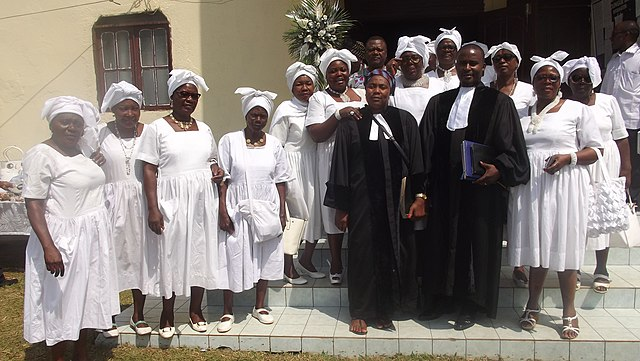
Christian school (Wikipedia Commons)

A third objection is that Paul is only referring to husbands and wives, not men and women in general. The Greek words for “woman” and “man” in 1 Timothy 2 could refer to husbands and wives; however, the basic meaning of the words is broader than that. Further, the same Greek words are used in verses 8–10. Are only husbands to lift up holy hands in prayer without anger and disputing (verse 8)? Are only wives to dress modestly, have good deeds, and worship God (verses 9–10)? Of course not. Verses 8–10 clearly refer to all men and women, not just husbands and wives. There is nothing in the context that would indicate a narrowing to husbands and wives in verses 11–14.

Yet another objection to this interpretation of women in pastoral ministry references women in positions of leadership in the Bible, specifically Miriam, Deborah, and Huldah in the Old Testament. It is true that these women were chosen by God for special service to Him and that they stand as models of faith, courage, and, yes, leadership. However, the authority of women in the Old Testament is not relevant to the issue of pastors in the church. The New Testament Epistles present a new paradigm for God’s people—the church, the body of Christ—and that paradigm involves an authority structure unique to the church, not for the nation of Israel or any other Old Testament entity.

Young Womens Christian Ass. (Wikipedia Commons)

Similar arguments are made using Priscilla and Phoebe in the New Testament. In Acts 18, Priscilla and Aquila are presented as faithful ministers for Christ. In verse 18, Priscilla’s name is mentioned first, suggesting to some that she was more prominent in ministry than her husband. (The detail of whose name comes first is probably inconsequential, because in verses 2 and 26 the order is reversed from that of verse 18.) Did Priscilla and her husband teach the gospel of Jesus Christ to Apollos? Yes, in their home they “explained to him the way of God more adequately” (Acts 18:26). Does the Bible ever say that Priscilla pastored a church or taught publicly or became the spiritual leader of a congregation of saints? No. As far as we know, Priscilla was not involved in ministry activity in contradiction to 1 Timothy 2:11–14.

In Romans 16:1, Phoebe is called a “deacon” (or “servant”) in the church and is highly commended by Paul. But, as with Priscilla, there is nothing in Scripture to indicate that Phoebe was a pastor or a teacher of men in the church. “Able to teach” is given as a qualification for elders, but not for deacons (1 Timothy 3:1–13; Titus 1:6–9).

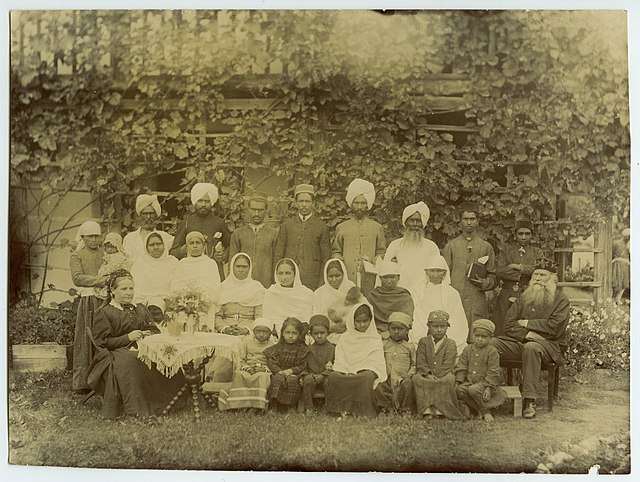
Woman Missionaries (Wikipedia Commons)

The structure of 1 Timothy 2:11–14 makes the reason why women cannot be pastors perfectly clear. Verse 13 begins with “for,” giving the “cause” of Paul’s statement in verses 11–12. Why should women not teach or have authority over men? Because “Adam was created first, then Eve. And Adam was not the one deceived; it was the woman who was deceived” (verses 13–14). God created Adam first and then created Eve to be a “helper” for Adam. The order of creation has universal application in the family (Ephesians 5:22–33) and in the church.

The fact that Eve was deceived is also given as a reason for women not serving as pastors or having spiritual authority over men (1 Timothy 2:14). This does not mean that women are gullible or that they are all more easily deceived than men. If all women are more easily deceived, why would they be allowed to teach children (who are easily deceived) and other women (who are supposedly more easily deceived)? The text simply says that women are not to teach men or have spiritual authority over men because Eve was deceived. God has chosen to give men the primary teaching authority in the church.

Our Women's Workers (Wikipedia Commons)

Many women excel in gifts of hospitality, mercy, teaching, evangelism, and helping/serving. Much of the ministry of the local church depends on women. Women in the church are not restricted from public praying or prophesying (1 Corinthians 11:5), only from having spiritual teaching authority over men. The Bible nowhere restricts women from exercising the gifts of the Holy Spirit (1 Corinthians 12). Women, just as much as men, are called to minister to others, to demonstrate the fruit of the Spirit (Galatians 5:22–23), and to proclaim the gospel to the lost (Matthew 28:18–20; Acts 1:8; 1 Peter 3:15).

God has ordained that only men are to serve in positions of spiritual teaching authority in the church. This does not imply men are better teachers or that women are inferior or less intelligent. It is simply the way God designed the church to function. Men are to set the example in spiritual leadership—in their lives and through their words. Women are also to set an example in their lives, but in a different way (1 Peter 3:1-6). Women are encouraged to teach other women (Titus 2:3–5). The Bible also does not restrict women from teaching children. The only activity women are restricted from is teaching or having spiritual authority over men. This bars women from serving as pastors to men. This does not make women less important, by any means; rather, it gives them a ministry focus more in agreement with God’s design.

1913 revival (Wikipedia Commons)

William James Roop